
2025 Progress on Campus Operations
From the built environment and land stewardship to waste, water, and purchasing, to connections and mobility, Lehigh is proactively discovering innovative, resilient solutions for our operations. By doing so, we are enhancing our operational efficiencies and increasing the overall well-being of the university and the broader community while leading by example in the transition toward a more sustainable future.
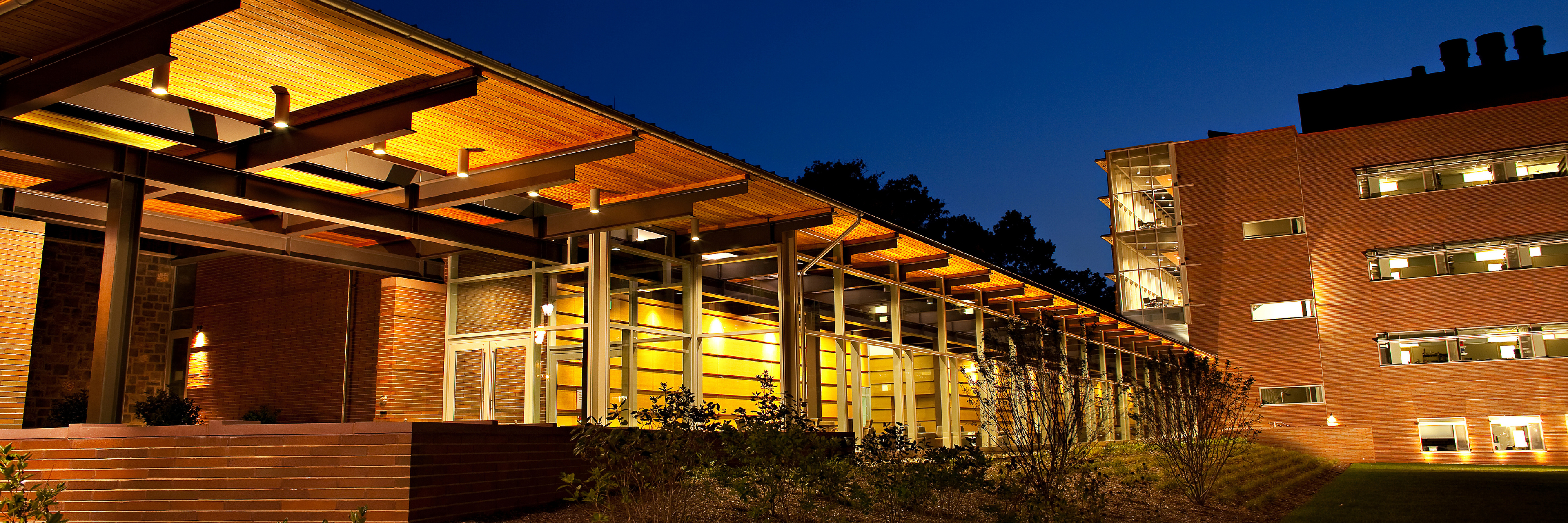
Our physical campus is becoming a model of efficiency. This year, we finalized our 30-year "Making the Future" campus master plan, which includes a comprehensive forest stewardship plan. We have achieved a remarkable 18% decrease in university-wide water usage compared to our FY2019 baseline, surpassing our initial target. This year also saw the Clayton University Center achieve LEED Silver certification, marking our 7th LEED-certified building. In our quest for a circular economy, the ReusePass program has been a triumph, diverting over 27 thousand single-use food containers from landfills in 2025 alone.
Connections and Mobility
Update: Not started.
*Additional funding and resources needed.
Update: 2 GEM vehicles were purchased in the spring of 2024. One is used by parking enforcement, and the other is shared among Auxiliary Services departments.
Next Steps: Monitor use of GEM's and operating costs.
*Additional funding and resources needed.
Update: In October 2023, the BikeShare Program was launched with 30 bikes, 10 in each of the parking garages across Asa Packer. BikeShare activity is being monitored and tracked.
*Additional funding and resources needed.
Update: Not started.
*Additional funding and resources needed.
Update: 1-2 carpoolers annually.
Update: Use of EV charging stations on the Asa Packer campus is being monitored. Expansion of charging locations is paused at this time.
*Additional funding and resources needed.
Update: Lehigh finalized a University Flexplace Policy in June 2021, and it became active in August 2021. The Remote Work Policy became effective in January 2022.
Update: Research on telematics was completed in 2022 and then was placed on hold.
Next Steps:
*Additional funding and resources needed.
Purchasing
Update: In progress. In 2024, completed peer benchmarking regarding sustainable purchasing policy compliance and used that information to develop key strategies for Lehigh; reviewed benchmark research with the Office of Sustainability and discussed additional ideas/suggestions for creating awareness.
Next Steps: Develop compliance monitoring capabilities, reporting, procedures, forms, etc.
Update: The Sustainable Purchasing Policy has been updated and released to campus as of 2020 - 2021.
Update: Target goals have not been established.
Next Steps: Revisit recycled paper as the standard. Unsure why such a high percentage of virgin paper was purchased this year. 30% was more common in prior years.
Update: The policy is implemented, but there is no easy means to monitor and report on progress and compliance outside of specific commodities. Furniture spend tracking remains an issue despite published standards.
Next Steps: Explore compliance monitoring procedures with Facilities teams and vendors.
Update: Lehigh’s sustainable purchasing requirements have been referenced in Lehigh’s design guidelines and standards since 2020- 2021.
Update: No started.
Update: Purchasing Services added a supplier sustainability questionnaire to RFP templates and evaluation criteria for Fall 2021 competitive solicitation events.
Surplus Property
Update: The e-waste process will be enhanced to break down the e-waste further.
Next Steps: Hire work-study students to assist with this process.
Waste
Update: Various waste audits have been completed in a dozen buildings since the start of this goal.
Next Steps: Determine next steps to pilot a zero-waste pilot program.
Update: Office of First-Year Experience is looking for guidance on what zero waste looks like. Conversations in the past have included specific types of plates and utensils and ensuring recycle bins are next to garbage cans.
Update: Successful completion of pre-consumer composting in CUC and briefly expanded to Brodhead. Renovations in CUC made the pre-consumer program shut down due to a lack of volume, and now made the program obsolete due to digesters.
Next Steps: Waste disposal contract will be bid soon and composting options will be included and factored into the eventual winner of bid.
Update: We continue to reach our recycling goals on construction waste and LEED Silver on all relevant construction projects.
Next Steps: Continue to make progress.
Update: Lehigh Bookstore continues to use fewer plastic bags, but for some transactions, they are still seeking a sutible sustainable option.
Next Steps: Continue to source alternatives to plastic bags.
Update: Rathbone Dining Hall began using Leanpath’s Waste Watch production waste system in August 2021. Other locations are pending.
Update: A working group was established in July 2021. As of 2025, progress has paused due to staffing and leadership changes.
Next Steps: Discussions will be restarted to determine the feasibility of this goal.
Update: There is not a standard developed for this so far; however, there is already work being done with retail dining locations (CUC, Hawk's Nest, coffee shops) on eliminating single-use plastics.
Next Steps: Continue work with managers, start developing a written standard with recommended alternatives.
Update: We currently use ReusePass eco-containers, which are deployed at Rathbone, Brodhead, and all dining locations within the Clayton University Center. The ReusePass program has been a triumph, diverting over 27 thousand single-use food containers from landfills in 2025 alone
Next Steps: Launch these in Hawks Nest.
Water
Update: A Stormwater Management Plan (SMP) was completed. The only recommendations that have been implemented are related to managing stormwater at construction sites such as SHM, HST, BIB, and CUC.
Next Steps: Stormwater management projects will continue to be implemented at new construction sites.
Update: This goal was completed. Overall campus water use in FY25 was 18% lower than in FY19. From 2021 to 2024, existing water fixtures in 24 buildings were replaced with lower-flow water fixtures.
Next Steps: In FY26, no additional funding was allocated to continue this effort. While a new conservation goal can be established, funding would also be needed to accomplish it.
*Additional funding needed.
Built Environment
Update: The post-occupancy utilization of the original HST design will be used to inform decisions about the design of the 3rd and 4th floor expansion at HST.
Update: Progress towards this goal has not started.
*Additional funding and resources needed.
Update: All new capital projects meet LEED silver or higher certification standards. Documentation is collected as part of the LEED process. This documentation is shared internally with LU Facilities and the Office of Sustainability for tracking purposes. Recent and upcoming LEED-certified buildings are operating as designed with sustainability in mind. Metrics for success are ongoing through energy use reporting.
Update: A dashboard has been in place for many years for the Lehigh community, showing building electricity usage. There is also one in place for the on-campus solar array. During the past year, Facilities installed chilled water meters in every building served by the APC central plant, so more metering data is available now.
Next steps: Facilities will continue to collect and use more utility data, but at this time, there is no further action planned toward creating a multi-utility building dashboard by Facilities. A student-led project to integrate these sources into a comprehensive multi-utility dashboard is currently on hold due to faculty retirements, the Office of Sustainability is evaluating next steps to resume this development and improve data accessibility.
*Additional resources needed.
Update: No progress was made on this goal during the past year.
Next Steps: Upon completion of a new APC chilled water central plant in spring 2026, it would make sense to implement continuous commissioning at that facility.
Update: Facilities continues to suggest and champion life-cycle analysis in any new capital project. Collecting and sharing data is continually evolving both from a space data and energy utilization data standpoint.
Next Steps: This effort is ongoing and tied to new capital project initiatives.
Update: Funding to develop a policy for embodied carbon has not been identified.
*Additional funding and resources needed.
Land Stewardship
Update: Forest Stewardship Plan is now part of the campus master plan (completed in Summer 2025).
*Additional funding and resources needed.
Update: A portion of the maintained lawn landscape on Mountaintop was turned into a native meadow in the summer of 2021. The site was planted in August. It takes three years for the meadow to fully establish. This will be used as a pilot for future locations on campus.
Update: As part of the contract, we compost all collected landscaped material throughout campus. We have also started the use of a variety of equipment throughout the campuses to be battery-powered and will continue expanding our more sustainable equipment to limit the use of gas equipment.
Next Steps: Continue to develop sustainable landscaping practices.
Update: Currently on hold; the initiative will be re-evaluated for alignment with the new campus-wide strategic plan and campus master plan.
Update: Following the successful implementation and monitoring of the Integrated Pest Management (IPM) Plan at the HST building, the program is now established and serves as the model for broader campus application. Building on the success of the initial pilot, the university is now focused on the phased rollout of these sustainable pest management practices across additional campus areas.
Update: A Campus Tree Advisory Committee was established and a Tree Care Plan has been developed. A baseline campus tree inventory was completed in Fall 2021. Lehigh was named as a 2021 Tree Campus Higher Education institution by the Arbor Day Foundation.
Next Steps: While initial benchmarks have been met, further expansion is paused pending a strategic review to synchronize this initiative with the evolving priorities of the Campus Master Plan.
Update: As of 2025, work continues to refine the commercial green lease template and standards and expand the fossil-fuel-free transition across university-owned properties.
Update: Since establishing minimum sustainability standards for residential renovations in 2021, the university continues to systematically phase out fossil fuels and improve energy efficiency across its housing units. Although the core 15% audit goal is complete, work remains ongoing as remaining properties are updated during scheduled renovation cycles.